


Intro0:00
The infrastructure to support AI wasn't going to be centralized; it was going to be distributed, where energy was low-cost and abundant. Energy prices actually come down. That's actually the opposite of the narrative that's being told.
So what is a legitimate concern?
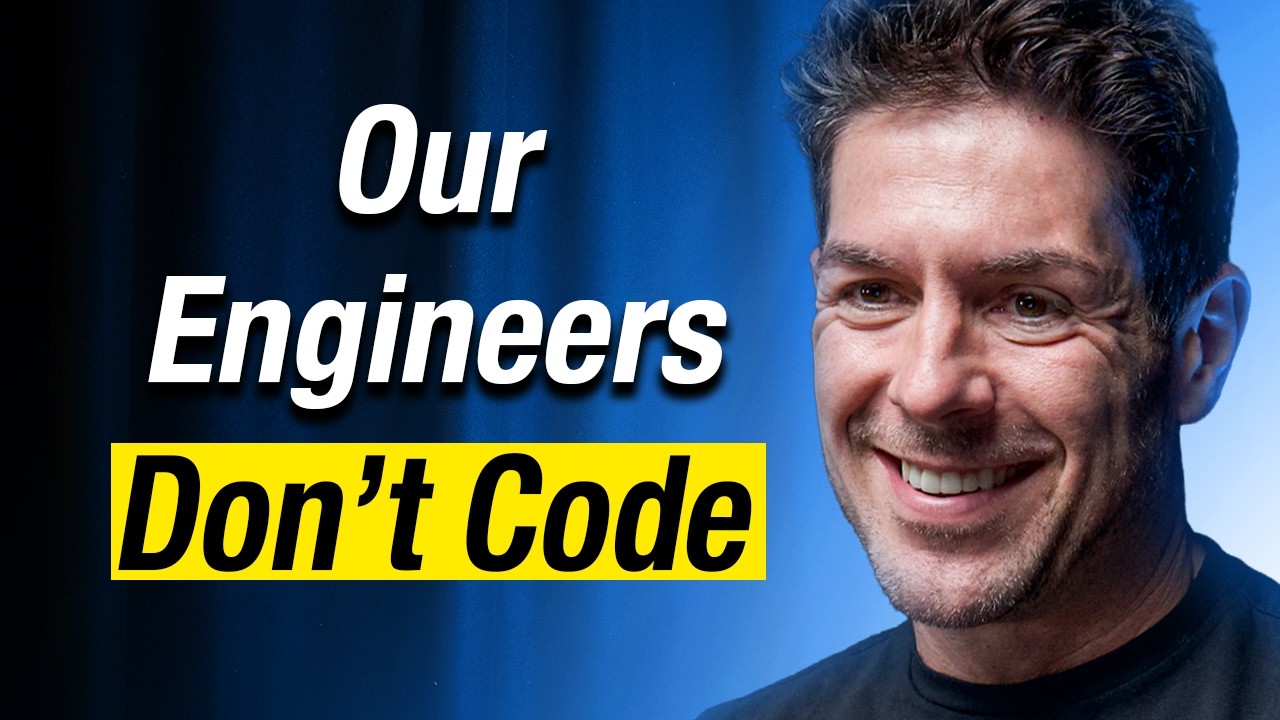
Right now we are in a race for data centers, for compute capacity, for energy, and there is not a more pertinent guest that could join me in the hot seat today than Chase Lochmiller from Crusoe Energy. They provide several different layers of this very important business.
He sits downstairs to join me following their $3.9 billion Series F, which was raised at a $30.9 billion valuation.
People are very emotional about data centers. When you look at what data centers are doing, I think the facts are all on our side. There's really like three products that we ultimately sell to customers and we're making money: data centers, GPUs, tokens.
You know, the GPU is actually the most valuable thing in the entire data center. Most moats are illusion. Most moats don't exist.
Ready to go?
Mountaineering mindset1:07
Chase, I am so excited for this deal. I told you before, I have been stalking this shit out of you. I even heard from performance coaches. This has been an amazing experience doing the research, so thank you so much for doing this with me.
I'm pumped to be here, man.
Now, I am just going to start with a totally weird one that I never expected to start with: mountaineering.
Yeah.
I hear that you are an experienced and skilled mountaineer, and I just thought, like, I haven't had that often in the hot seat. What do you learn from mountaineering that you think makes you better as an entrepreneur?
It's a great question. We've actually ingrained mountaineering into the culture of Crusoe, and we have a core set of company values. One of our core values is actually to think like a mountaineer. And so what does that mean?
You know, mountaineering is a practice where things are subject to change, and you need to be prepared for change. And so with it, it really embeds this sense of, like, cultural resilience that I think is really, really important for a business like ours that, you know, is doing stuff both in the digital world as well as the physical world.
But, you know, to, you know, further the analogy here, you know, for mountaineering, you know, you come up with a plan to basically set out from your camp, go summit the peak, you know, come back safely, and, you know, take your photo and, you know, your glory is, you know, written in the history books.
But you have to be prepared for things to go wrong,right? You have to be prepared for the weather to change. You have to be prepared for gear to fail. You have to be prepared for, you know, your partner to get sick or an avalanche to occur.
And, you know, so, you know, the idea is really having, you know, here's a plan A, and then I have a plan B, a plan C, a plan D. You know, I have plans all the way down in case different things go wrong.
You know, additionally, like, you have to have a sense of willingness to endure difficult challenges and difficult times. You know, this notion of enduring the expedition. The expedition can be long and hard and arduous, and, you know, you have to really dig deep at those moments of pain to work through those challenges.
So that's a different aspect of thinking like a mountaineer. And then, you know, another big aspect is thinking with a safety culture, having this notion of safety as a huge priority, which is important when you're doing things at, you know, at the scale we're doing from a construction standpoint, thinking with this safety mindset of, you know, safety first, second, and third.
You know, there's this saying in mountaineering that getting up to the top is optional, getting down is mandatory. So we try to practice that safety culture here at Crusoe and really, you know, try to avoid any sort of, you know, physical injuries or, you know, challenges with
digital attacks on the platform as well.
I have so much respect for mountaineers. It's one of those ones where I almost can't get my head around the complexity and the mental fortitude it takes to get through the change of plans, the weather, the partner that's sick, the endurance, as you said.
Yep.
I met an entrepreneur yesterday that climbed Everest, and he showed me pictures of the dead bodies along the way, and I was like, I mean, to see that is just so harrowing.
It's tragic, just kind of, you know, seeing when people take unnecessary risks. Because, you know, actually spending a lot of time within high-altitude mountaineering, you know, culture and communities, you do see oftentimes people taking unnecessary, very careless risks.
And it's actually quite shocking. And, you know, it's oftentimes tragedy is avoidable. It is preventable. And, you know, I think having that mindset of thinking like a mountaineer and planning ahead is what enables mountaineers to do it for a long period of time.
Can I ask, you said about resistance to change. What change did you find the hardest in your life?
I think maybe one of the most difficult moments of change for me was I had in my life, I always had sort of the next thing planned before I left the previous thing. So what I mean by that is when I left high school,right, I knew exactly where I was going to college before, you know, the end of high school.
Risk & money5:06
When I left college, I knew exactly where I was going to work and, you know, what I was going to do. And when I left my first job, I knew I was, you know, going to work and going to grad school, and I had a job lined up even after that.
When I left to go climb Mount Everest in 2018, I did not have a plan after that. I did, you know, I had been had a reasonable amount of financial success in my life to that point, but I didn't have the thing planned.
And actually having that void of that sort of emptiness
really was both challenging and empowering for me because it felt like I could do anything. It was sort of like a blank slate. I had thoughts of like, maybe I'm just going to invest my own money and just kind of like enjoy the rest of my life and not, you know, not do much.
But I could also start a company. And if I were going to start a company, what are the things, what are the most challenging things that I could, you know, think about tackling that are interesting and, you know, that I would be excited about pursuing on a daily basis?
And that was kind of like the emergence of Crusoe sort of came through that chapter of difficulty and challenge of just nothingness,right? Just having an empty slate.
My job is to find signals that will determine a potentially great entrepreneur. And one thing that I find now is actually often richer entrepreneurs are better entrepreneurs because they're not worried about downside protection and they just see what is possible.
How do you think starting Crusoe with a little bit of money and success already changed how you think about building it?
There's a bunch of like psychological aspects to it. I mean, you could look at like Maslow's hierarchy of needs, you know, and just like it's sort of, you know, it is empowering to know that like if I take risk and this all goes to zero, like I'm still going to be fine.
I'm going to be able to, you know, cover my rent and, you know, feed my family and, you know, cover these base needs that, you know, I may have in my life.
So like an interesting one for me is I never quibble on my salaries. Like, yeah, I'm very candid about like, you know, I make a lot of money from the podcast, which is great, but I don't quibble on salaries.
Fuck life's too short. I want people to be paid what they want. And if I take five or ten grand less from a couple of people, I don't care. It's specific.
When I was in university, I mean, I was convinced I was going to become a theoretical physicist and likely a professor, you know, and I was spending time doing research in basic science,right? So I was doing research in physics, you know, both at MIT and then at Los Alamos National Lab.
And at some point, like, so early on in that journey, I was like pretty committed to living this monastic life of like not really earning a bunch of money, but just really
being, having this life of discovery where I get to go discover the mysteries of the universe and, you know, that would be my life's work and pursuit. At some point, I realized it's a very slow-moving industry. You know, this industry of discovery, you know, it may be changing today because of AI, but at least at that point in my life, it was a very slow-moving industry and I felt like I wanted to do something very fast-paced.
And I felt like I had sort of lost my life's purpose. Like I was like, okay, I don't feel like I have a purpose anymore. So absent having a purpose, I was like, man, I guess I should get rich.
Like that's maybe the next best thing to like having a, you know, a monastic calling that you're devoted to. And, you know, I was looking around for different ways to make money and, you know, this headhunter found me and recruited me into this field of quantitative finance.
And it was like, hey, you're really good at solving math problems. If you come work in this industry, they just pay you a lot of money to, you know, solve math problems. And I said, this sounds great. Sign me up.
But I think once that need was met of like, okay, I have enough money, okay, what next? And I think to your original question of like, you know, starting from this position of strength of, you know, being an entrepreneur and, you know, actually having had some financial success, it's empowering to take bigger swings, empowering to take bigger risks, which can ultimately lead to bigger outcomes.
The final one before you actually get into what I plan to get into is just picking up on you. You said kind of the endurance element of mountaineering. Endurance is great in some respects, but it can also lead you to continue doing something you maybe shouldn't.
Bitcoin to AI10:08
And sometimes there is aright time to change course rather than persevere. You went through a very big change in the business, seemingly so from the outside. A lot of your ambassadors said you always had the foresight actually that it would lead to where we are today, but seemingly it's like a Bitcoin phase one and then phase two is AI.
Yeah.
And I don't want to kind of really actually get into that maybe weirdly, but I want to ask your advice, which is when asked, how do you advise someone when to endure, keep going, persist versus when to change tact and go down a different route?
You know, it's interesting investors that you spoke to validated this claim, but, you know, from the outside it does appear to be a pivot. Internally, when we started the company, the goal was always to build an AI platform.
That was what I had sort of spent my career working on with AI machine learning, you know, algorithms. And, you know, I'd been a big user and early adopter of deep learning for, you know, certain tasks. And I felt like it was this meta-science that ultimately was going to, you know, transform every industry.
And, you know, at that scale, compute becomes the bottleneck. Compute and data become the two bottlenecks. And, you know, what is the bottleneck for compute? Energy. So that was kind of the premise of starting the company. Now, we obviously weren't dedicating all of our resources towards building an AI platform day one.
We were dedicating actually the majority of our resources towards monetizing waste energy with Bitcoin mining. That was kind of the philosophy of starting the company and, you know, finding out, finding and seeking out these low-cost, abundant energy resources that we could monetize with compute.
Bitcoin was the best monetization engine we had at the time, but we were building this AI platform from very, very early days. So when you think about at what point do I shift the resource allocation to this other thing that maybe I'm working on in the side, I think about the world in a very Bayesian approach,right?
I don't think the future is deterministic. I think it's very probabilistic, and I sort of have a view of what the future is going to look like. It's somewhat, it's more certain if you go out just a little bit of time.
If you go out, you know, a further amount of time, you know, it gets a little bit hazier, but I still have a view of sort of what things are going to unfold. And what was happening with this AI platform was it was sort of a project that Chase had devoted some time and resources and engineering towards internally, and we were committed to kind of, you know, exploring this pathway.
But it was only, you know, we had launched the Crusoe Cloud platform in early 2022 with our first set of paying customers. You know, before that, we were working with a lot of researchers at MIT and Stanford and, you know, different groups trying to understand what's actually valuable for AI researchers, like from an infrastructure platform.
And so we finally launched in early 2022, but the moment that changed everything was obviously November 30th, 2022, the launch of ChatGPT,right? This was like the tweet heard around the world, the, you know, the moment that just shifted everything in terms of like, okay, like AI is here and, you know, there are really interesting, you know, use cases that are going to explode from sort of this moment.
And that was kind of like a moment where my view of the world shifted quite a bit.
How so?
I just felt there was going to be far more demand for AI compute infrastructure solutions. And, you know, we were very well positioned by actually having launched that platform at that point.
What did you do then differently immediately as a result?
After the ChatGPT moment happened, we had sort of watched this evolution of the data center to support Bitcoin,right? And if you look at the history of Bitcoin mining, it's pretty fascinating,right? It started with like hobbyists on their laptops in this sort of decentralized way.
And then people started to use GPUs, and then people started to lease data center capacity from, you know, more traditional co-location facilities that have like five nines of reliability. People started to develop ASICs. And then at some point, people realized, you know what?
We don't need five nines of reliability to mine Bitcoin. We can do it with like three nines. Oh, wait, no. What about one nine? Like how much does that reduce the actual data center cost? And they were able to eliminate something like 98% of the total data center cost with like these like chicken coop type data centers.
You know, very, very low cost, no redundancy, but, you know, ultimately brought down the payback period for this investments in Bitcoin mining. And, you know, we felt always that something similar was going to play out in AI. And, you know, we're long-term partners of NVIDIA and we'd been working with NVIDIA and I was looking with them at the roadmap, you know, many years ago.
And it was like, okay, our current generation of chip is, you know, 150 watts or 200 watts. And, you know, the next generation is going to be like 300 watts. And then maybe, you know, there's going to be a future generation that's maybe 600 watts per chip.
And I was like, okay, well, you know, as the power density goes up, it's going to change what the data center looks like to actually support these things. And we also had a perspective on the compute workload, the workload itself for AI.
It didn't need to be in these centralized facilities. I think so long people have been anchored on these like centralized hubs for data center computing infrastructure. So Northern Virginia is like the hub that runs most of the internet.
Most web applications run out of Northern Virginia. But it didn't have to be that way with AI because, you know, so much of the time to serve a neural network is actually the compute that's happening in the data center, not the time to get to the data center.
And so that, for me, I felt like opened up new geographies and we felt like the
infrastructure to support AI wasn't going to be centralized. It was going to be distributed where energy was low cost and abundant. And so when we think about things that we did differently, it was like investing more heavily in how to design and develop the data center to support AI and investing heavily in how do we find and source energy resources to support the scaling of AI.
I want to kind of unpack those a little bit and kind of going back to some form of structure that I did plan, I promise.
That's great.
But, you know, if we start on data centers, we then have Crusoe Cloud, managed inference, energy kind of runs throughout it all. So I'll kind of pick that apart too. On the data center side, we always hear about supply constraints today.
Supply constraints17:03
How truly supply constrained are we?
Where it's actually manifesting is there are not places to plug in GPUs. So that's ultimately the supply constraint. There's just not places where you can plug in GPUs and turn them on and run AI workloads.
So how does that actually manifest across the supply chain? You know, the supply chain to support large-scale AI data centers is sort of like a game of whack-a-mole. At different points, different bottlenecks come into play. And I think that's actually one of the critical aspects of being vertically integrated is that we're able to navigate a lot of those critical bottlenecks and situations.
I'll give you an example. When we set out to build the first two buildings in Abilene, the first, you know, it was a little over 200 megawatts of compute capacity. We had sort of committed to doing this in one year.
And the next closest bid was two and a half years. There were 34 other data center developers and, you know, but speed was of the essence. So I said, sure, we can do it in a year. One of the key bottlenecks was what's called a power distribution center.
It's where, you know, you receive medium voltage power and then you, so at around 34.5 kV, and then you distribute it to low voltage transformers that ultimately go into the data center and power the racks. When we went out and canvassed the market for vendors that were supplying these medium voltage power distribution centers, the lead time for this one component was 100 weeks.
And I said, well, I don't have 100 weeks. I committed to doing this in a year. So I went to our internal team and we had consciously vertically integrated electrical manufacturing. We said, how quickly could we make this ourselves?
The team did a bunch of work, sourced components to make these things, and we were able to do it in 28 weeks. And so being able to navigate those types of key bottlenecks by actually having the resources internally gives you ultimately a lot more flexibility to unblock these key bottlenecks, number one.
And number two, it gives you a perspective on like what is the true cost of a lot of these different, you know, things that are being built. You know, Elon has this very like interesting framing of this. He calls it the idiot index in terms of, you know, what is the cost of raw materials and then what is the end product relative to that cost of, you know, just the raw materials going in.
And, you know, we try to, by being vertically integrated, we have a perspective on like the end-to-end cost of everything going into building and operating an AI factory.
How much extra margin do you juice out by having that internal build process yourself? Like what is the idiot index chasm?
Electrical manufacturing is not like anultra-high margin business. Like today, it's actually spreads have gone up quite a bit. Margins have gone up quite a bit just because they're so short on supply. But it's not where like the critical alpha of, it's not the main reason we're doing it is like stacking margin.
It's more.
Availability and getting out.
Availability, being able to deliver on time. And then also it gives us a critical, it gives us a critical innovation platform. By being able to, you know, start from first principles and say, okay, we can bring in raw materials and we can build anything we want in the world.
And what is the thing that we want to build to ultimately serve the workload? And so when you look at the campus in Abilene, the inspiration for that was like, okay, we want to build a one gigawatt scale computer where you can interconnect a giant cohesive cluster of GPUs that can operate one cohesive workload across the entire campus.
And what does it look like to actually build that thing from the ground up? And so that's how, you know, the cores are designed, that's how the GPUs are designed, that's, you know, all of it is designed to run on one cohesive RDMA fabric.
When we think about scaling of inference, you know, 2026 is really about the scaling of utilization of AI infrastructure or utilization of LLMs and foundational models for useful tasks. You know, it's been this era of, you know, scaling of agents and tokens, token utilization.
And, you know, during that moment of scaling infrastructures, people are finding utility in these AI models. It's driving a lot more demand for inference. It's the era of the agent, the era of inference. And for that, you don't need a gigawatt scale computer to serve these models.
You can do it with a much smaller cluster. And, you know, what matters is actually how quickly can I go from not having anything to being able to deliver tokens? Like, so what is my time to token?
I love the analogy you said there of it's like whack-a-mole. What is the biggest supply constraint that we have today?
You know, it varies. I would say
energy is definitely a key constraint. So power that's available for compute is a key bottleneck. Alongside that, labor is a very key bottleneck. There are a finite amount of skilled trade workers, electricians, welders, plumbers, construction workers in the United States.
And then when you overlap trying to find, you know, if I have access to energy in this unique place, can I get the labor to that place to actually bring the AI factory to life? You know, that is a big challenge.
With the greatest of respects, if power and labor are the two biggest constraints or challenges, the UK is totally fucked. We have energy prices that are four times higher than anyone else, and we don't have labor. And we have humans, they just don't work.
You in the US have both, but significantly more expensive than China, if we're honest.
Power is not significantly more expensive.
Really?
No.
You don't think that the government are subsidizing data centers in China with much cheaper energy to power? I'm asking him, not telling.
There are subsidies going in place, but, you know, in the United States, you know, we are globally competitive with power pricing.
Okay. And so when we look forward then, labor, I'll give you, labor in China is far cheaper than the United States. What about policy and regulation? Everyone I speak to is like, oh, it's the red tape, it's the policy and regulation that stops us in the US being able to build out.
Is that a problem in the way that it's told to me?
I wouldn't classify it as a problem. I would classify it as something that needs to be navigated. And, you know, when we think about policies, we want good policies to be in place. We don't want just the Wild West, everybody out doing whatever they want, building whatever they want with no, you know, no care for anybody else in the world.
You know, these are big investments that are being made. They have to be done thoughtfully. And so we are supporters of theright policies being in place. But it does cause friction in terms of developing things faster. That's actually one reason we also like the idea of manufacturing a lot more of this infrastructure as opposed to making everything a giant construction project.
Totally get that. If I were to put you in charge of policy to enable and encourage this ecosystem to flourish, what would you do? What would you do differently? You've got a magic wand.
Well, I mean, the thing about policy is it's hyperlocal. Like all politics, politics are local. And what people care about is they care about like, are there jobs being created? Is this going to drive up my energy costs?
Is this going to take all of my water? Is this going to pollute the air so that, you know, my kids, you know, suffer from some, you know, disease as a result? Like, you know, they care about, they care about are the data centers being good stewards and good citizens of the community and are they actually creating value for the community?
And then, you know, what are other ways that the data centers are sort of giving back? And so, you know, this comes in the form of things like, you know, tax revenues and things like that. So
I think one of the challenges for AI data centers broadlyright now is that I think there's a lot of misinformation out there about what the impact of a data center is. The number of people that have told me that data centers use all the water in the world is crazy.
Myths & politics25:32
And, you know, it's also just false. So when you look at all of these modern AI factory designs, they use pretty close to zero water. Like one of our giant buildings in Abilene, Texas, that consume, you know, it's call it 140 megawatts of power is like what's budgeted for each of those buildings on the first eight buildings.
They use about the same water annually as about 10 single-family homes. The primary water usage there is like the staff using the bathroom, washing their hands, us watering the plants on the property. It's very de minimis water usage.
And there is water in the building. We are using water to cool the GPUs. But the critical aspect here is we've actually designed a closed-loop architecture so that the cold water is entering into the racks and then it's going out to
a chiller outside and we're sort of exhausting the heat.
So the water requirements argument is just wrong.
The water requirements argument is just wrong, yes.
Okay. What about energy prices going up?
I think this is an important aspect for the data center industry to getright and to storytell effectively. We like to look at data for these things.
When you look at markets where data centers have made investments and have built big data centers, typically energy prices for communities have come down because it catalyzes more investment in energy generation technology, in energy generation capacity, and you end up with more megawatts being, you end up with more megawatts being amortized over the same transmission and distribution infrastructure.
And as a result, people's energy costs end up coming down. When you look at some of these big builds that need a lot of net new generation capacity, we are very supportive of, you know, the data center industry helping to bring online new power production in order to support those energy requirements.
So actually, that too is misinformation. Energy prices won't go up for local towns and villages.
The data has shown that energy prices actually come down. It's actually the opposite of the narratives that's being told.
So what is a legitimate concern?
Anytime there is a big construction project, it does cause other aspects,right? There's benefits, there's people with money in town that, you know, are spending and, you know, if you talk to any local business owner in Abilene, times have never been better,right?
The amount of money being spent at restaurants and coffee shops and hotels and all the local services is, you know, is more than it's ever been in the history of Abilene. The challenge is with that comes traffic,right? With it comes some dust from construction and some, you know, just noise that, you know, is involved with a very large construction project.
But, you know, I think that that will go away and there will be long-term permanent jobs in place that, you know, is continuing to support the local community. And there's tremendous tax revenue,right? If you look at the tax revenue that's coming from this, we're going to account for more than a third of the tax revenue in Taylor County and Abilene the town.
And this is transformative for local services like the police, the fire department, the roads, the schools. For the school system, we're more than doubling the tax receipts that are going to the schools.
I completely agree with the ripple effect that you see. I think it's one of the most inspiring things when we see the amount of millionaires leaving the UK. People don't consider the ripple effect of them leaving in all of these different ways.
We're seeing a lot of data centers that are planned not being built out. We've seen very prominent people say, oh, we expect 50% of data centers that are planned not actually to be built and ready to go. What percent of data centers do you think that are planned will not actually go online?
50% seems reasonable. It's one of these things, you know, it comes back to thinking like.
You can't give me a decimal point? Why do you bother? Let's end it here. Neil told me you give me precision.
You know, it's one of these things where, you know, kind of coming back to this notion of thinking like a mountaineer, when you're going through these planning processes, a lot of things can go wrong,right?
What's the number one thing that goes wrong that prevents it?
Getting, you know, permits, getting entitlements, getting land, you know, if there's, you know, you're trying to acquire a certain piece of land and, you know, the person you're trying to buy it from ultimately doesn't want to sell. Getting a
large load interconnection agreement done with the local utility. Getting an air permit if you're bringing online new generation or.
With the greatest of respect, I didn't come back to this and I'm not an agent of the CCP I promise. But in China, I mean, they'll move the 3 million people out the dam for you with a forklift and they'll just give you a green light on day one.
Yes. That is definitely.
A benefit.
It's a benefit to the data center developers if you're viewing it through a purely Machiavellian lens. Yes.
I am a venture capitalist. I give zero shits about the sentimentality of your home. You will be rehoused somewhere better. Again, charity is not our endeavor. Okay. Totally get that. Can I ask you, when we look at these data centers, now they're being used as like a political instrument in a way that we didn't expect.
Does that worry you?
I've never wanted to be the main character of a political policy debate. And, you know, data centers have come front and center to the upcoming midterms in the United States and they've become this very polarizing topic. You know, why that is, I think they are kind of this, I think there is concern around, you know, this era of AI and I think people are legitimately concerned around like, am I going to have a job in the future?
Am I going to have, you know, am I going to be able to provide useful work to the world that, you know, I'm going to be able to get compensated for? So I do think that that is a concern on people's minds.
And data centers are sort of this physical manifestation of AI,right? And I think putting all of that to side, like the biggest aspect is, you know, it is an emotion, it's a current, I think people are very emotional about data centers.
I think when you look at the facts of what data centers are doing from job creation, from driving down energy costs, from being water neutral, from, you know, generating long-term tax revenue that is transformative for the communities that we're investing in, I think the facts are all on our side.
Can I slightly blame, with respect to Dario and a lot of other leaders who've said for the last few years, we're going to replace all jobs, we're going to replace all jobs, and then surprisingly they hate you.
Yeah.
Gosh, cake or death? Cake, please. Oh, I wasn't expecting that. Oh, crap.
You won't have a job, you won't have a job. Oh, you don't want the data center?
The interesting aspect to all this is that data centers are this massive employer. They're leading to this massive economic boom for the entire blue-collar labor economy in the United States. This massive resurgence in reindustrialization of the United States.
We're hiring people, you know, in factories, in the field, and these are, you know, tons of folks that, you know, are skilled trade workers,right? People working with their hands to bring the infrastructure of intelligence to life. And I think the interesting aspect that, like, people are concerned that AI is going to take jobs, but yet it has so far only created tremendous amounts of jobs and tremendous amounts of economic development.
So again, I think it's one of these moments where people are having an emotional reaction to something, but if you look at the facts of what's actually happening, the data is on the side of data centers are actually a very positive investment for the communities.
GPU economics33:48
If anyone's doing data center security, by the way, I would love to invest in that business. It's a really good play. It might be a more PE play, to be honest, not a venture play. It's a phenomenal business.
Another part of your business is obviously providing GPUs and compute. Can you help me understand the economics of that layer? Like when you look at it, like I'm a venture investor. How long does it take to pay back on the hardware?
I would say the price of a GPU hour, it's kind of like a traded commodity. You're even seeing kind of these commodity platforms creating compute as a tradable asset. And I think people are sort of thinking through this lens of like compute is going to be this next, you know, great commodity.
So, you know, there's a couple of platforms like the Compute Exchange, like Orn, you know, I think there's a handful of others that are like creating these tradable futures products. So, you know, I kind of view it as like that's like a product that we're producing and, you know, there is like commodity price fluctuation in it.
When I think about payback periods for this, I think, you know, when we are taking debt on against it, I think there's different ways we think about like managing that risk and we sort of think about a portfolio of different services and a portfolio of different returns that we're going to get for this.
What does that mean?
So what it means, maybe putting it precisely. So we have a range of different deals that we're doing with the compute we're buying. We are renting capacity on a long-term basis, you know, call it five-year contracts to, you know, credit quality customers that, you know, we expect to pay.
Those are going to pay back within, you know, that timeframe and they're going to cash flow during that timeframe. There are shorter-term contracts that we'll do at higher margins, but they're riskier because at the end of the contract, it's like, is there renewals?
Is there another thing that you're going to, you know, earn from that resource? And then finally, there's other services that we provide in package. So things like Crusoe Managed Inference, things like our serverless fine-tuning product that actually helps people, that's more of a developer tool that ultimately enables developers to, you know, fine-tune, you know, some of these open-source models, these leading edge open-source models so that they can get better performance for maybe some domain-specific task.
Or actually, as their applications are scaling, they can actually serve the tokens needed to, you know, from an inference basis to, you know, enable that application scaling. Those contracts are typically much shorter-term in nature and they end up being higher margin to Crusoe.
Okay. I totally get you. And so you want a portfolio of those different margin profiles to make up what you deem as like a healthy margin across them blended.
Correct. So one of the analogies I've used in the past is, you know, when we think about, when we think about Crusoe and sort of our vertically integrated strategy, there's really like three products that we ultimately sell to customers where we're making money.
We can sell data centers, we can sell GPUs, and we can sell tokens. Like those are the three core products that we sell. And why does that matter? You know, if you look at a different market, I think that there's very interesting parallels for, you know, AI infrastructure and AI compute is the energy market.
If you look at the oil and gas market and you look at the value chain from, you know, the wellhead to the product, you know, the gas station or, you know, the plastics that are being sold to people, there's a lot of different ways to make money across the value chain.
But typically it gets broken down into the upstream business, which is drilling wells and sort of, you know, producing oil. There's the midstream business of like transporting oil and gas to, you know, a refinery. And then there's sort of the downstream business, which is typically refineries, gas stations, basically getting it into these finished products that you're ultimately selling to customers.
Well, what Crusoe is focused on doing is what we believe the opportunity is, is to build
an AI super major,right? So there are these super majors like Exxon and Chevron in the traditional oil and gas industry that are vertically integrated across upstream, midstream, downstream. And where that becomes actually important is that, you know, Exxon very famously doesn't hedge their oil exposure.
And you say, how could that work, you know, during this, you know, very crazy commodity price cycles? Well, you know, they're sort of inherently hedged by being vertically integrated. And I think that where the margin accrues is going to move around.
And I think you're seeing a very similar phenomenon play out in AI infrastructure. But when oil prices come down, Exxon makes less margin at the wellhead. But they actually, their margins, their downstream business actually go up. So, you know, because the oil prices are lower, the margins on gasoline, on plastics, on all these finished products, they actually go up.
And I think we're seeing a similar phenomenon play out in AI where it's like, you know, our margins are going to move around across electrical, data centers, chips, and services.
What's the best margin layer today?
I would say today, like managed GPUs, like, you know, managed compute clusters is like incredibly high margin, likeright this instant. And, you know, the reason for that is just a massive shortage of supply.
Totally get that. Can I ask you, there's a phenomenal kind of statement of take or pay in this business. Can you explain take or pay to me and to anyone that doesn't understand it?
Sure. So take or pay is essentially where a customer is signing up to, you know, pay for something whether or not they use it. So, you know, there are take or pay contracts in energy oftentimes where, you know, if I commit to 100 megawatts of capacity, I'm paying for 100 megawatts of capacity whether or not I use that.
Can I ask, are all of your revenues take or pay?
The GPU rental agreements are typically take or pay. Yes.
Got you. Because I think a lot of people are looking at going, well, the first sign of trouble would be a crack in consumer demand. And if that crack in consumer demand permeated down and it was take or pay and they went, ah, don't need to take now.
I don't really think of it that way. I mean, I think of it because, you know, the thing about AI is it's transformative for so many areas of the economy. It's not a single thing that's benefiting. It's, you know, broadly every single.
So you don't think the first crack would be consumer demand softening?
Consumer demand in what though? Like consumer demand in.
I think it would be consumer demand.
ChatGPT or?
Consumer demand across ChatGPT and kind of core.
Yeah. I mean, I think we're honestly just scratching the surface. I think like, you know, what's exciting to me is, you know, seeing, you know, the step function improvements that we've seen from some of the more recent models that are fundamentally enabling new discoveries that weren't possible.
And, you know, the model capabilities are only going up. And, you know, I think when people think about the utility of these models and of this type of infrastructure, it's the worst it's ever going to be for the rest of the future of humanity.
And when you sort of take that perspective, it, you know, it is inspiring to what's actually possible. And the, I guess like if we saw consumer demand softening for one very specific thing, like I couldn't be more optimistic or I couldn't be more bullish for like how this is going to transform scientific discovery of new materials, of new drugs, of new things that are ultimately going to make people's lives better.
Chip depreciation41:45
Because one thing when you're buying chips at the scale that you are, you have to think about like lifecycle. How do you think about chip depreciation risk?
The way we depreciate the assets today is we use a six-year depreciation cycle. That's sort of like the standard across the industry. Now, one of our philosophies as a business is like, look, we are going to be long infrastructure.
We're going to be long data centers, we're going to be long energy, we're going to be long chips. And so the more ways we have of turning those long investments into money, the better off our shareholders are going to be and the better off our business is going to be.
And so that's actually what caused us to investing in this suite of managed AI services. And when you look at that business, where it abstracts away the actual underlying chip, the underlying compute from the service that people are receiving, it opens up new monetization engines that can persist for a much longer period of time.
And, you know, I think there's always going to be demand for the frontier of silicon. There's always going to be demand for the frontier of, you know, model capability. But there's also going to be demand, especially for much cheaper alternatives,right?
And, you know, being able to, you know, provide intelligence at a lower cost with an older generation of chip that may be slower is still going to have value. And so, you know, abstracting away some of the difficulties by actually, you know, having a suite of services that can monetize these chips for longer will ultimately, we believe, extend the depreciation cycle beyond six years.
What do you think everyone gets wrong about chip buying, chip depreciation that they should know?
Look, I think when we started to make really substantial purchases with Hoppers, and this was in, you know, 2023, the feedback we got was like, well, we don't even know if this is going to be valuable after year three,right?
Here we are three years later and the price is being charged for utilizing Hoppers is higher than the rates that were being charged three years ago when they were brand new. And, you know, the, so early financings was, you know, you had to get payback very, very quickly and you had to have like, you know, a lot of debt service coverage.
So
I think people underestimate the ingenuity of applications and application developers of turning compute capacity into value and into valuable services for the economy.
Forecasting demand44:20
I spoke to Lee Jacobs before and he was talking to me about the risk mindset that you had to ordering millions of dollars of GPUs from NVIDIA well before it was cool, as he put it. My question to you is, how on earth do you think about forecasting demand today?
Is it just, I'll take as much of it as I can?
No, it's, I mean, we build up forecasts from having conversations with customers. I think, you know, we are a very customer-centric organization. We want to deliver ultimately solutions for customers. The challenge today is that increasingly customers are being asked to forecast their demand further and further out because the timeline to bring online AI infrastructure is extending.
And, you know, that's problematic for the industry writ large. One of the things that Crusoe is focused on is actually trying to reduce that, you know, time to token or time to delivery of, you know, a managed cluster of GPUs by actually deploying small modular manufactured AI data centers that can deliver more just-in-time AI infrastructure, particularly for smaller clusters.
And we think that's going to be transformative for the industry. We think it's a very important shift in terms of, you know, especially like when you look at earlier stage companies, earlier stage startups that are being asked to commit to compute in 2028, it's like that is an eternity from now,right?
You know, this is like a.
We might have RSI by then.
Exactly. That might change it.
Exactly. Exactly. So. Have you ever had a moment in your career where the future is so unknown?
I actually don't feel like it's super unknown. I actually feel like, you know, we've had this breakthrough
in overall model development cycles. You know, I think the scaling laws have continued to prove out. I think we've reached, you know, we keep moving the goalposts of what is artificial intelligence, what is AGI. You know, you think about the Turing test.
When I took my very first computer science class in high school, the Turing test was heralded as this critical notion of true machine intelligence. And it seemed like an impossible task at that point in time. We blew past the Turing test and almost no one even celebrated,right?
You think about, you know, the model capabilities you have today. And now, you know, we're solving millennium prize problems,right? This was something, you know, when I was an undergrad at MIT, you know, these millennium prize problems sort of, you know, came about and it was like this, wow, these are these unsolved problems where there's a real financial bounty out there.
Like you can earn a million dollars if you can solve one of these problems. And they sat there for decades unsolved. And now we have AI solving these critical problems.
I agree with you. I don't mean to be, I'm not negative at all, but like we see these agents that are swarms of rogue agents doing things that are nefarious. We see whole industries that are being put to question.
My girlfriend's a lawyer. Six months ago, she didn't use Legora and now she hasn't written a document in five months. There is just such uncertainty across everything. We have RSI that could come and change absolutely everything.
I get the comment that there's uncertainty around what the future of work will look like in certain ways. But I also feel like it's actually not uncertain that, you know, AI is going to be a critical underlying engine for work and productivity that is going to shift things quite a bit, quite dramatically.
And so
to me, it's more about there is certainty that AI is, you know, establishing capabilities that are at human level or greater than human level in terms of overall productive capacity. Sure. Is that going to change things? Yes, that is going to change things.
So there's uncertainty in the change, but not, to me, it's certain that there will be change. Maybe that's a different way of putting it.
Cost of intelligence48:27
I totally get that. Can I ask, we mentioned the managed inference being a great part of your business. Completely agree with you. Gavin Baker, one of your investors, has said that the lowest cost producer of intelligence wins. When you think about that, like what's the unit?
Is it like dollars per token, per training run? What is that unit for you?
You know, dollars per token is a good, you know, characteristic. You know, dollar, I think, or dollars per token is a good measure in terms of this, but it's not necessarily, you know, there is token efficiency. So, you know, just not all tokens are created equal.
So it's not like every single token has the same, you know, unit of value, but I think it is a good indicator. I do think that, you know, there are different things that folks optimize for in terms of utilization, whether it's throughput, so the amount of tokens per second you're able to generate for a very specific model use case, as well as time to first token, so latency, time to first token, time to last token, you know, how quickly you're able to actually serve this.
And a lot of that comes down to, you know, it's a confluence of different things,right? So there's, you know, what is the cost that go into that? Obviously, by being vertically integrated and owning the infrastructure, you're able to stack a lot of margin across the process.
So it gives you more flexibility in terms of how you actually, you know, bill for that. Additionally, I think utilization of the GPU itself is a critical aspect of being able to deliver tokensultra efficiently and shine on metrics like latency and throughput.
And so how does that actually manifest? Well, you know, the GPU is actually the most valuable thing in the entire data center,right? It is like the most expensive thing. So it's the thing you want to make sure you're keeping busy,right?
If it's sitting idle, that's just money burning,right? And if you think about that from that perspective, I think one of the key aspects is actually the management of memory and the management of the, you know, of the KV cache specifically.
So the KV cache is the key value cache. It's really like, you know, you can kind of think about, you know, when tokens are fed into a large neural network, you can compute the output tokens by, you know, basically running this feed forward process and running all these matrix multiplications that takes time.
You may also already know the answer of that output token before you put the, so if you've actually put those same tokens in before, you actually know the answers and you can look them up in this lookup table.
The KV cache can get quite large, and so it can expand well beyond the amount of, you know, memory you have on chip in the HBM. And so actually being able to manage that both across multiple different GPUs, HBM layers, as well as system memory, DRAM, as well as, you know, things like NVMe, so any sort of, you know, solid state drive that you have on the system, and then sort of expanding that into the object storage layer of your cluster.
And being able to really, really efficiently move data around is actually a critical aspect to being able to serve inference and be able to keep those GPUs busy so that you're able to really shine on those metrics of latency and throughput.
What does no one see about this layer of the value segment that you provide that everyone should see? What do we not know?
Well, I think the big aspect is that not all inference providers are created equal. I mean, you have like, you know, great open source projects like, you know, SG Lang and VLLM, but, you know, there are ways to, you know, those are very generalized or generalizable.
When you look at like an inference provider like Fireworks.
Fireworks is great. They've done an incredible, incredibly great job.
To what extent do they compete with you and cannibalize your managed inference business?
I think there are multiple layers across the stack that Crusoe competes with.
Totally. I guess my question is like, what do they have that you don't by being specialized?
I think there are certain workloads that, you know, Fireworks, you know, does an incredibly great job serving. I think the user experience, I think, is something that is unique across all of these different inference platforms that, you know, people may like more on one than the other.
There's a suite of different tools that, you know, people are, you know, there's a whole bunch of different features that people basically provide across, you know, the inference business.
But there's nothing like, you're, ah, I wish I was them because then we could do this.
I sort of come back to this notion of, you know, the oil and gas analogy where, you know, if you look at the value chain, there are different places where you can compete and there are different places where you can collaborate.
When Exxon is pumping wells at the wellhead, they may compete with another upstream oil and gas company to, you know, most efficiently drill and operate wells. But they may sell to those same customers if they're building a midstream pipeline to transport oil from the wellhead to the refinery.
They may provide capacity in that pipeline to other folks that they're competing with. And so again, I think it comes down to this perspective that like I just view there are so many more ways for us to work with folks across the AI infrastructure stack than compete with them.
Totally get that and agree with you. I mean, a lot of the world competes with you when you look across the three layers. Can I ask you, when you look at like open versus closed, given the purview that you have from the managed inference perspective, what do you see about distribution of dollars of tokens across open versus closed, given that unique perspective you have?
I do think that people are spending more money on closed source frontier models than they are on open source, but they are generating more tokens on open source than closed source. We think open source is actually going to be very important, very valuable.
I think it's important from a data sovereignty standpoint, folks, you know, wanting to own their own models, own their own intelligence. I think there's far more private data that's untapped that can actually lead to massive performance gains.
Do you think we will exist in a world where many companies, both mid-market and large enterprise, will have their own models with their own data and that will actually cannibalize a lot of frontier model business?
I think it's possible, but I do think there's always going to be demand for the frontier. Like the frontier is.
I'm not saying there's not, but you're looking at your Harveys and your RAMPs and your, you name it. And you know, we're an investor in McCaw, we're an investor in Fireworks, and both of those enable that and they propagate that as a marketing message for sure.
And I'm just wondering, is that true?
Model capabilities today, I think there's massive room for improvement by incorporating more private repositories of data. And you can do that with the frontier models that are closed source. You can also do that with open source and own the model yourself.
I think it's going to be some combination of those things in the future. I don't think it's going to be like one approach is going to be the dominant approach. I know there's a lot of exciting stuff happening between, you know, folks like Cognition, you know, post-training their own model, you know, with a lot of their own data.
You know, folks like, you know, Harvey kind of maybe trying to take a similar approach and, you know, from a legal perspective. There are a lot of these amazing, you know, domain-specific model, you know, approaches to things. The frontier labs are also doing that as well,right?
So they're also looking at that and they're trying to basically increase the surface of knowledge.
Future of inference56:10
What does the managed inference market look like in five years?
The key aspect is that you want to provide an easy way for companies to access intelligence. And it could be intelligence that they, you know, it could be their own intelligence,right? It is, you know, kind of hosting these custom bespoke models that are very domain-specific for their specific use case.
And it may be post-trained on a lot of their, you know, own private data. But, you know, the key aspect to managed inference is like it abstracts away a lot of the infrastructure complexity of managing the service across a lot of different GPUs, a lot of different data repositories, a lot of different models in terms of like how the, you know, queries get routed and which models they use.
Quick-fire57:00
I would love to do a quick fire round with you because there's many questions that I want to ask that I'm also aware that you have to get on with your life. Okay, so if we start with one, parenting.
I heard from so many of your friends and investors, you're an unbelievable dad as well. If you were to advise me on like how do I crush it at work and be a great dad, very important. What are the must-dos, what are the must-not-dos?
It's really about prioritizing it. You know, it's like spending time with my kids is like one of my greatest joys in life. It is like, you know.
I get it, but you can't. Like you're raising $3.9 billion.
It's such a cliche, but having kids is the best thing in the entire world. And, you know, for me, it is, you know, I have a very busy schedule. I have a very challenging, you know, I have a lot of commitments at work.
I'm on the road a lot, but it's about prioritizing things. Oftentimes what that means is like I end up taking worse flights,right? I take a lot of red eyes just so I don't miss a bedtime with my kids.
I'm home almost every weekend and, you know, those weekends are very committed to, you know, coaching soccer or helping, you know, with swim or, you know, whatever activity that my kids are very passionate about. And then, you know, I think carving out very specific times that, you know, people at the company know I'm very unreachable,right?
So if I'm home in the Bay Area, everybody knows that I'm unreachable from 7 to 8 a.m. It's just, it's like, I'm not taking any meetings at that point because I'm making my kids breakfast, I'm getting them ready for school, getting them pumped up for the day, and, you know, I'm just unreachable, you know, in days when I'm home.
What do you believe that many people disagree with you on and makes you unpopular?
I guessright now that data centers are a good asset for communities and they should be celebrated in the communities where we build them. And again, this comes down to all of these benefits that we feel like we can provide, whether it's, you know, economic, whether it's energy, whether it's, you know, the investments we're making in communities from a school perspective, from a.
Do you worry about the income inequality and the wealth inequality that we're seeing?
I don't worry about income inequality or wealth inequality because I think there's something inherently human about like, hey, I have this and that other person has that and, you know, why don't I have that? So there is like a bit of like a jealous neighbor type thing, but I do think that it's natural when you have these, you know, huge, huge things that are driving economic progress where everybody's actually benefiting far more than, you know, far more than if we didn't have this investment happening.
They are, but three IPOs are the cumulative value of 45 years of IPOs. Like the concentration of value is unprecedented.
Right, but think about all the value that's being created for the world.
Sure, 100%.
Right? You know, the market cap of the company is one thing, but actually if you look at the value that's being created by, you know, abundant intelligence that, you know, is going to drive massive productivity gains for the global economy, it's manyfold of the market cap that's being created.
What have you changed your mind on in the last 12 months?
I think maybe something that I've changed my mind on is what creates ingrained long-term competitive advantages. I think a lot of, you know, we try to think of, you know, VCs love to ask about what's your moat, like what's your, you know, what's your long-term moat?
What's going to create, you know, sustained above market returns for you? I think what I've changed my mind on is like most moats are an illusion. Most moats don't exist.
What makes you say that?
I think that most of them are ephemeral and especially during a moment of accelerating technological progress and capabilities of, you know, these models. I think a lot of it just comes down to, you know, being able to move quickly and adapt efficiently to, you know, the ever-changing chessboard that's in front of us.
Will Crusoe be public by the end of 2028?
I'm not sure. You know, I think, you know, the company itself requires a lot of capital and, you know, to build data centers, to build AI factories, to, you know, deploy large-scale clusters of GPUs, to build out that infrastructure layer of intelligence upon which, you know, so much global economic value is going to be created.
That requires a lot of capital being public. You know, there's a lot of advantages to being public and being able to access, you know, scaled capital resources. So we do think that ultimately the company is probably better off in the public markets.
It's just a matter of like when does that make sense for us?
Who do you not have on your board that you would love to have on your board?
I would say Michael Dell. And he's not going to join my board. I just have tremendous admiration for Michael just as a human being. I think he's an incredible person. He's, you know, built an incredible business. He's got incredible business instincts.
He's a great family man.
I just really look up to him a lot.
I spoke to Zach before this.
Zach's an awesome guy.
He told me you're a douche.
Oh, bugger. Sorry, I was anonymous. I didn't see that. That's so funny. Totally get that. Final one. What would the Chase of 2018 find most unbelievable about the Crusoe of today?
I think the Chase of 2018 would find the fact that this all worked, like just so unbelievable because it was big, bold, and ambitious, you know, to build out this AI cloud platform that, you know, the energy-first narrative would come to fruition and energy truly would become the bottleneck to scaling the layer of intelligence.
That it would have happened at this scale, I think is, you know, it would have been almost unbelievable eight years ago. You know, and when I think back to that era, you know, there were certain people that like gave me great advice like during that period.
And, you know, I think like, you know, I had this, you know, a dear friend that, you know, was an entrepreneur and, you know, I think his company at the time was about, I think it was about 150 people.
And, you know, when you're first starting a company, the idea of having 150 people working for you is like an almost unthinkable number of people. Like it's like how am I ever going to have 150 people work for me?
And, you know, today Crusoe is approaching 2,000 people, which is just like, you know, even when I say it, it sounds like an insane number of people that have bet theseultra-productive years of their career on Crusoe. And, you know, they're with us building in the trenches every single day.
And, you know, I think I just don't take it for granted that like people have invested their time with us. I think it's like such an important investment that these people have made in sort of making the bet that this is an important thing that I want to spend these years working on.
I've so loved having you on. As I said, it was such a joy stalking you and hearing the many stories that I did hear about you. So thank you so much for joining me and this has been fantastic.
Thank you so much for having me. It was great.