
Fundraising Strategies
Episodes from 20VC with Harry Stebbings about Fundraising Strategies.
7 episodes
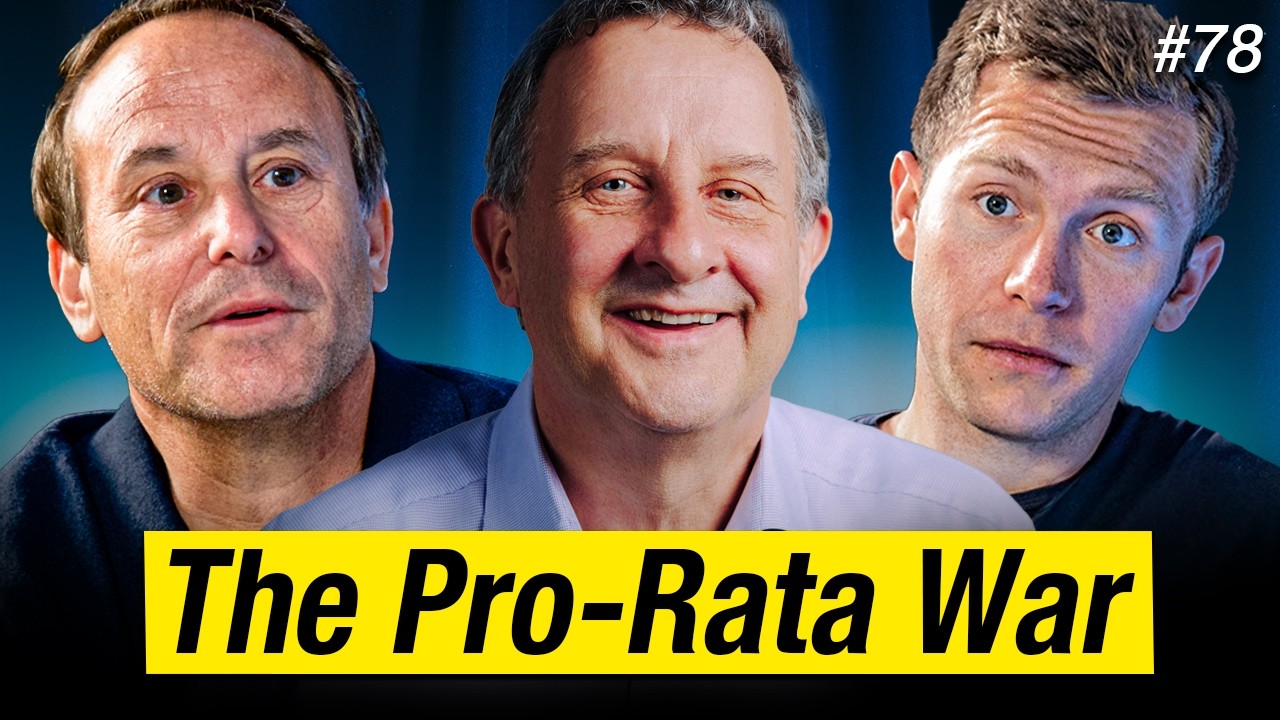
Valar Atomics Sues Day One Ventures | Meta's Back to the AI Frontier | NVIDIA's $30B Reflection Deal
Oct 15, 2026 · 1:17:10
Harry Stebbings hosts Jason Lemkin and Rory O'Driscoll to break down Valar Atomics suing its seed investor Day One Ventures over pro rata rights ahead of a $6B Sequoia-led Series B, Meta's return to the AI frontier with Muse Wonder, and NVIDIA's rumored $30B acquisition of open-model lab Reflection. Lemkin says both sides erred—Day One should raise it once and let it go rather than hire Quinn Emmanuel—while Rory notes mega funds demanding pro rata waivers never waive their own. They call Meta's internal-only model performative yet see a monster AI product in Muse. The committee backs Jev's $870M Series A at $7.5B, sees bubble risk in 42 decacorns in one year, calls Haiku's 90% price cut the first deflationary LLM move, and warns the SaaS apocalypse persists without scale.

Meta's Muse Hits #1 | Menlo Sounds the AI Bubble Alarm | Keith Rabois vs Airwallex: Who is Right?
Sep 24, 2026 · 1:20:44
Harry Stebbings, Jason Lemkin and Rory O'Driscoll argue Meta's Muse hitting #1 is the first true ChatGPT competitor and a Trojan horse that added $100 billion to Meta's market cap, and that Anthropic's delayed $2 trillion IPO is a bet on a cleaner Q4 story, not a cracking market. They break down OpenAI's $278 billion burn and $700 billion of CapEx, argue Jev's $40 million seed shows 20% of a $100 billion LLM spend will leak to cheaper classifiers, and predict agentic commerce will maim Amazon while benefiting Shopify. They debate disappearing traditional seed rounds, FOMO-driven checks and what LPs should back today. They approve Factory at $5 billion — coding is the motherlode — pass on Crusoe at $30.9 billion, and side against Keith Rabois in his Airwallex fight, urging founders to build an army of advocates.

How LPs Allocate to Venture in 2026: What They Want, What They Don’t | Baylor University CIO
Sep 14, 2026 · 1:16:29
David Morehead, Chief Investment Officer of Baylor University's $2.6 billion endowment, argues that velocity of capital matters more than fund multiples — a 3x growth fund compounding every six years beats a 15x venture fund held 18 years. He explains why Baylor holds about 2.5% of its endowment in Anthropic, why it bought the software crash down 50-60% by betting on human behavior, and why growth equity is its largest private allocation. Morehead details his rule that returns cannot be discussed without time, position sizing of $3 million per underlying company, and why managers must stick to the strategy they raised on. He names permitting as the data center bottleneck, is bearish on Europe, calls private credit overhyped, and argues biotech could be the next major opportunity.
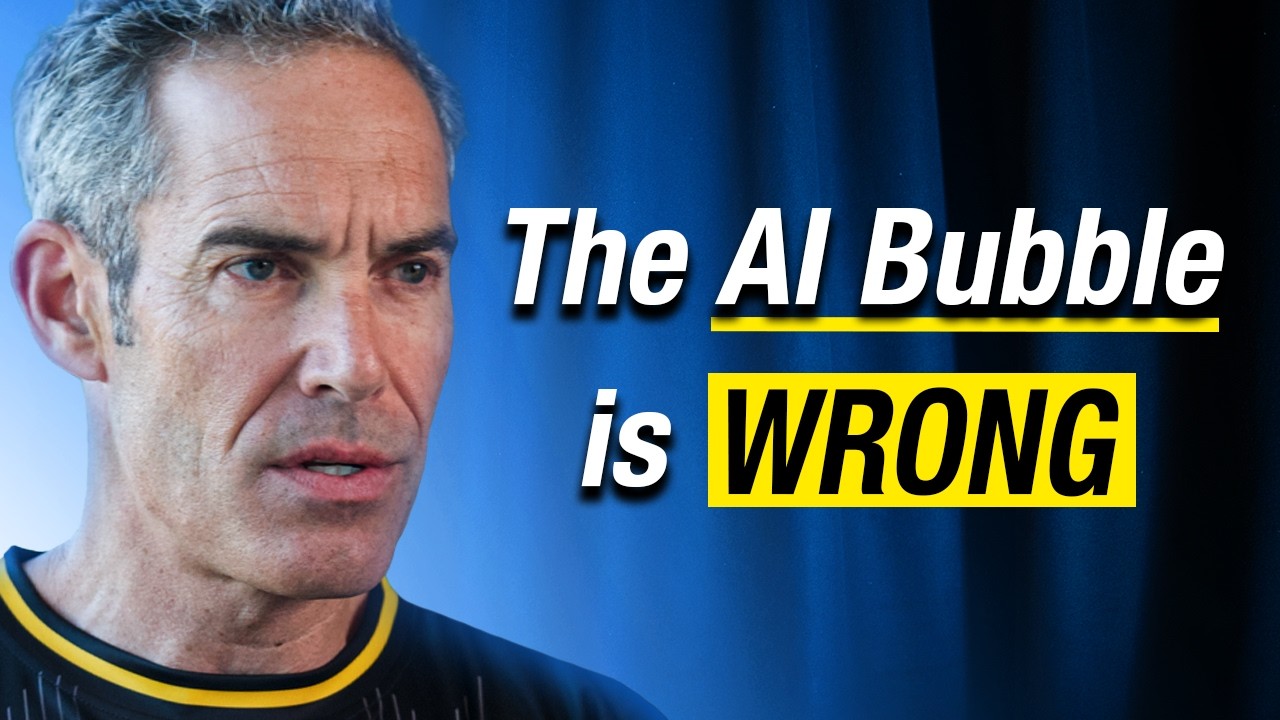
ClickHouse CEO: AI Margins Need to Improve | Revenue Concentration Should be a Concern
Aug 31, 2026 · 1:05:57
Aaron Katz, co-founder and CEO of ClickHouse, tells Harry Stebbings the AI cycle is 'just getting started' — revenue growth is unprecedented, but the biggest risk is revenue durability because agentic apps have low switching costs. He accepts lower gross margins if expansion is possible, measures AI token spend by ROI, and predicts agents will have identities, budgets, and pick their own infrastructure. He argues open-weight models won't win the enterprise over trust concerns, and sees enterprises moving back on-prem. ClickHouse revenue went 0, 12, 50, 200, finishing north of 500 this year, with >200% NDR; Katz would take the under on $1B ARR by December 2027. He calls the $2B Series B with no product the priciest round; revenue concentration matters — AI customers are under 12% of revenue.

Anthropic's $30T Assumption & OpenAI Confirms IPO | Why Customer Service & Robotics are Overinflated
Aug 27, 2026 · 1:26:44
Jason Lemkin, Rory O’Driscoll and Harry Stebbings say the AI boom now depends on Nvidia and hyperscalers financing frontier models, as shown by Nvidia's $6B Poolside purchase and $1B at a $12B pre-money valuation. They dissect OpenAI's promised 2027 IPO, arguing it has no choice as Anthropic outraces it and 'it's all about code'; they call Anthropic's $30T TAM claim delusional and OpenAI's $200 plan a losing consumer business. Also covered: Mercor's $20B round, Hugging Face's $13B sale risk, Citadel unwinding 80% of Leopold's fund, Stripe's 41% growth, agents' data leaks, and why customer support, humanoid robotics and AI services are the dumbest categories. Their verdict: we're less than a third of the way through the cycle and addicted to tokens.

Stripe's $8B OpenRouter Bet | Anthropic's First Profit & The Math Behind Reaching $600B in Revenue?
Aug 20, 2026 · 1:17:47
Harry Stebbings, Jason Lemkin and Rory O'Driscoll analyze SpaceX's $60B Cursor takeover, Stripe's $7B OpenRouter deal, Anthropic's first profit, Silver Lake's $43B Workday bid and Lovable's $13.3B round, arguing all reward speed and growth over margin. Musk got Cursor at ~10x forward revenue; Microsoft, not Meta, is the real loser. OpenRouter is a niche that may vanish in five years, yet could become 20-30% of Stripe revenue. Anthropic's first profit on $11.5B Q2 revenue was inevitable at ~40% gross margin; only 2027-28 projected revenue matters for its IPO. Workday is a 5.3x-revenue system-of-record LBO baseline versus 70x trailing for OpenRouter, and Higgsfield's $5.5B and Lovable's $13.3B are compared to Cursor, with Lovable 'not radically off' as AI apps accrete moats.
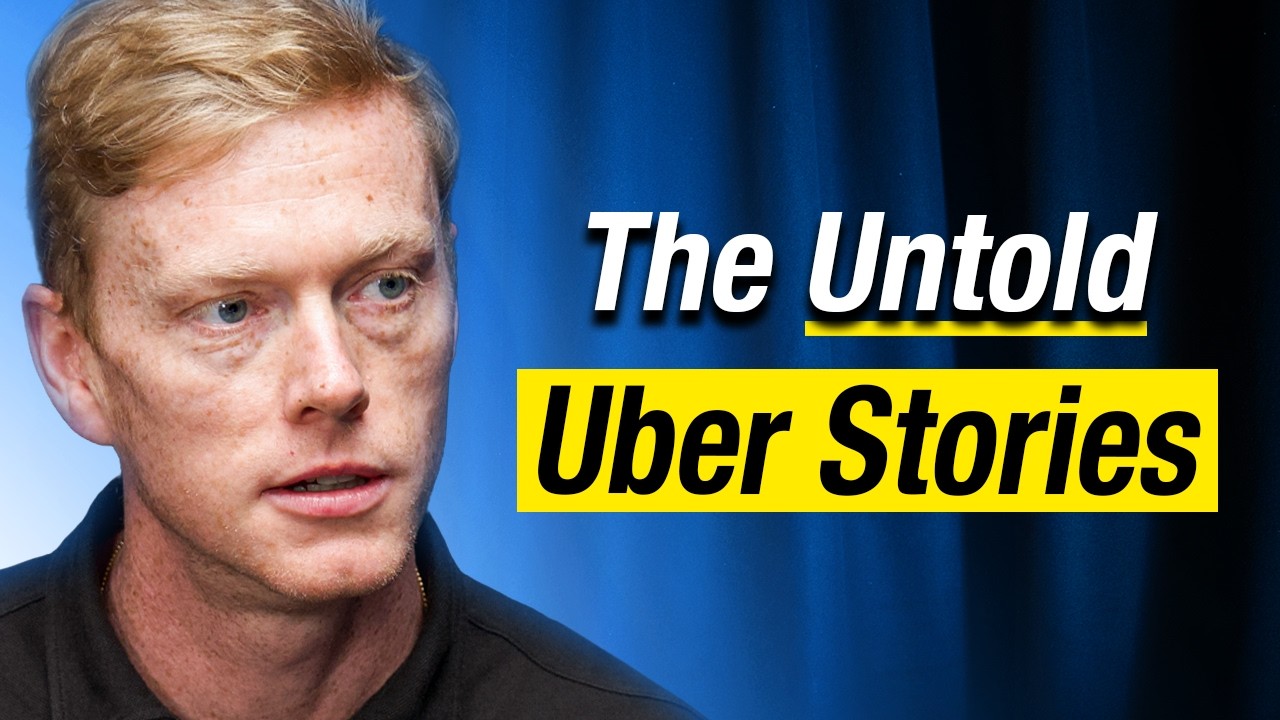
Uber President on Travis, China & Self-Driving | Why Autonomy Is Existential | How to Beat DoorDash
Aug 17, 2026 · 1:09:44
In a rare interview, Uber President and COO Andrew Macdonald tells 20VC host Harry Stebbings that autonomy is existential for ride-hailing and distribution beats superior technology. He says Uber One is the most efficient long-term lever — membership beats price incentives — and admits he was wrong to resist it. On AI, Uber blew through a year's budget in four months because usage is vertical; ROI is real but hard to quantify, so he advises combining compute and headcount budgets. Recounting Uber China, Uber burned $52 million a week on subsidies before exiting to Didi, a deal he calls successful. He also explains the Delivery Hero acquisition, why Uber Eats trails DoorDash, and leadership lessons from Travis Kalanick and Dara Khosrowshahi.
Powered by PodHood